
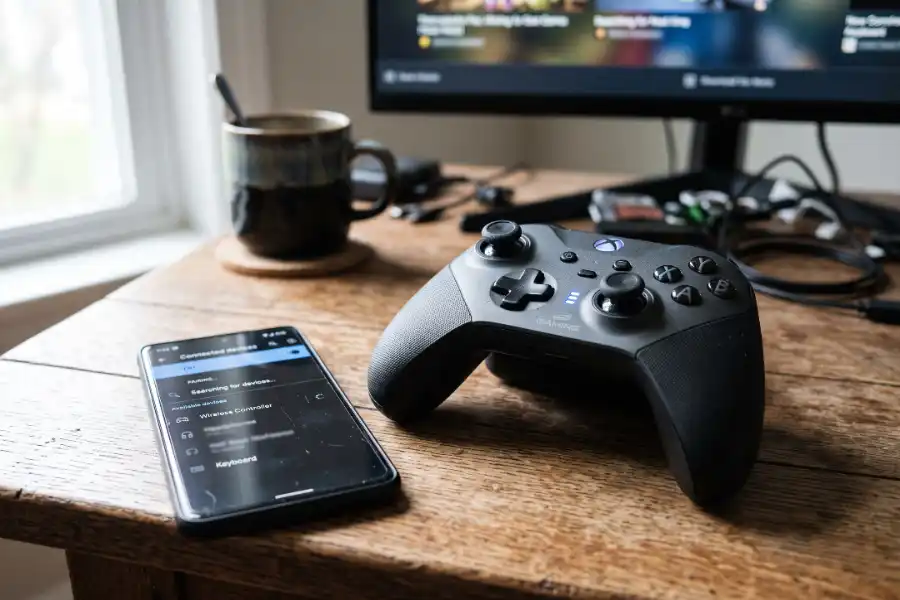
Connectivity Issues HSSGamepad: Every Fix That Works
Your HSSGamepad won’t pair. Or it pairs, then drops the connection two minutes into a match. Or it just sits there doing nothing while your game waits for input that never comes.
You’re not imagining it. Connectivity issues with the HSSGamepad are one of the most searched gaming problems online right now. Most articles repeat the same five tips, copied from each other, without really fixing anything.
This article is different. It walks through every real fix, in the order that really works. It also explains something almost no other article about this device will tell you upfront.
What Is the HSSGamepad, Really?
Before you troubleshoot anything, you need one clear answer: what device are you holding?
Here’s the truth. “HSSGamepad” is not a single, clearly branded product from one company. The name shows up across many different websites, and those sites describe it in different ways. Some call it a wireless controller. Others describe it as a connector or adapter. There is no confirmed manufacturer page, no listed company, and no widely recognized model number tied to the name.
This matters, because it means specific details, like Bluetooth version, button layout, or charging port, can vary depending on which specific product you bought.
So before trying any fix, flip your controller over and look for:
- A brand name or logo
- A model number or serial code
- A small regulatory mark, such as FCC or CE
- The exact name it shows up as in your Bluetooth device list
That information will point you to the right manual and save you time. The fixes below still apply either way, because they solve the same problems that affect nearly every wireless or USB controller. But if you can identify your exact model first, do that.
Quick tip: if you only try one fix from everything here, remove the old Bluetooth pairing and add the controller again as new. This single step solves more connectivity issues than anything else on this list.
Quick Checklist Before You Do Anything Else
Most connectivity problems get solved by one of these basic steps. Try them in order before moving on to anything more advanced.
- Charge the controller fully. A low battery causes strange, random disconnects.
- Turn the controller off, wait 10 seconds, then turn it back on.
- Restart the device you’re connecting to, whether that’s a PC, phone, or console.
- Remove the old pairing from your Bluetooth list, then pair again from scratch.
- Stay within 3 feet of your device while pairing. You can move farther away once it connects.
- Try a different USB cable. A cheap or worn cable is a common hidden cause.
If one of these fixes it, you’re done. If not, keep reading. The next sections match specific symptoms.
Fix 1: The Controller Won’t Pair or Isn’t Found
This is the most common complaint, and it’s usually simple to fix.
- Hold down the dedicated pairing button, not just the power button, until the light flashes quickly. Turning the controller on is not the same as putting it into pairing mode.
- Open your device’s Bluetooth settings and remove any old or “ghost” entry for the controller before adding it again.
- Turn Bluetooth off, wait a few seconds, then turn it back on. This clears small glitches that build up over time.
- Check your device’s Bluetooth version in its settings. Older phones and computers can struggle to hold a stable connection with newer controllers.
- Try pairing with a different device. This tells you whether the problem is the controller or the device you’re connecting it to.
This works for the same reason that clearing a DNS cache fixes stubborn website loading errors: old, stored connection data can go stale, and wiping it out gives your device a clean slate to reconnect properly.
Fix 2: It Pairs, But Nothing Happens In-Game
Sometimes your device shows the controller as connected, but your game still ignores every button press. This is one of the most confusing connectivity issues, because it looks like a pairing problem when it isn’t.
Here’s what’s really going on: your device sees the controller, but the game expects a different input format than what the controller is sending.
- Check whether the game supports controllers at all. Not every PC or mobile game does.
- If you use Steam, open Steam Input settings and confirm the controller is detected there, not just by Windows.
- Close any other software that maps or remaps controller buttons. Two programs fighting for control of the same device is a common cause.
- Restart the game completely after connecting the controller, instead of plugging in mid-session.
Fix 3: It Keeps Disconnecting Randomly
A controller that drops out mid-game is one of the most frustrating connectivity issues, because it tends to happen at the worst possible moment.
- Low battery is the number one cause. Charge it fully, not just partially, before a long session.
- Wireless interference from routers, microwaves, and other Bluetooth devices can knock out weaker connections. Move other wireless gadgets away from your play area.
- On Windows, check power management settings. Some systems let the computer turn off Bluetooth devices to save power, which causes random disconnects. Open Device Manager, find the controller, open Properties, go to Power Management, and uncheck “allow the computer to turn off this device to save power.”
- Keep other paired Bluetooth devices to a minimum while gaming. Every extra connection competes for the same signal.
Wireless interference is a headache across nearly every consumer device, not just gamepads. Newer connectivity technology like Ankwave is actually being developed specifically to cut down on this kind of signal interference across Wi-Fi, Bluetooth, and other wireless systems.
Fix 4: Wired (USB) Connection Won’t Work
If a cable connection isn’t being recognized, the cause is almost always one of four things.
- The cable is charge-only, not data-capable. Cheap replacement cables often skip the data wires entirely. Try a cable you know supports file transfer, not just charging.
- Try a different USB port. Some USB 3.0 ports cause issues with older controllers, so it’s worth testing a USB 2.0 port.
- Open Device Manager on Windows by pressing the Windows key plus X, then choosing Device Manager. Look for a yellow warning icon. If you see one, right-click it, choose uninstall, then unplug and replug the controller to force it to reinstall.
- Avoid USB hubs while troubleshooting. Plug directly into the computer to rule out the hub as the problem.
Fix 5: Delayed or Laggy Button Presses
Input lag is different from a full disconnect. The controller stays connected, but there’s a noticeable delay between pressing a button and seeing it happen on screen.
- Switch to a wired connection for anything competitive. It removes wireless delay entirely.
- Close background programs that might be using the controller or competing for the same wireless frequency.
- Lower the number of other Bluetooth devices connected at the same time.
- Check the game’s own controller settings for a dead zone or sensitivity setting that might be masking real input as lag.
Platform Notes: Windows, Android, iOS, and Smart TVs
- Windows: Use joy.cpl to test your setup. Press the Windows key plus R, type joy.cpl, and press enter. This confirms whether every button and stick registers correctly.
- Android: Most modern Android phones support Bluetooth controllers natively, but individual apps and games decide whether they’ll respond to one. Check the game’s own settings menu.
- iOS: iPhones and iPads are stricter about which controllers they support, and support varies from game to game. If pairing succeeds but the game won’t respond, the game itself may not support external controllers.
- Smart TVs and consoles: Support for third-party or generic controllers varies a lot between models. Check your TV or console’s own controller support list before assuming the controller is faulty.
How to Prevent Connectivity Problems Long-Term
- Charge before every session instead of during it.
- Avoid letting the battery fully drain repeatedly, since this shortens battery life over time.
- Store the controller somewhere cool and dry, away from direct sunlight.
- Keep some distance between your controller and other wireless devices while playing.
- Re-pair fresh every few months, even if the connection seems fine, to clear out small pairing errors before they cause a bigger problem.
Frequently Asked Questions
Why does my HSSGamepad’s light keep blinking?
A slow, steady blink usually means the controller is searching for a connection or waiting to pair. A fast blink usually means it’s actively in pairing mode. A blink combined with the controller not responding often points to a low battery.
Can I use it on a PS4 or PS5?
This depends entirely on the exact model and manufacturer of your controller, which is part of why identifying your specific device matters so much. Generic Bluetooth controllers don’t automatically work with PlayStation consoles, since PlayStation requires specific licensing and pairing support.
Does it work with an iPhone?
Some Bluetooth controllers do, but support depends on both the controller and the individual game. Pairing successfully in your iPhone’s Bluetooth settings doesn’t guarantee that a specific game will respond to it.
Is there an official app or support page?
Search results for this product name are inconsistent, and no single, verified manufacturer page currently stands out as an official source. If your controller came with printed instructions or original packaging, that’s a more reliable starting point than searching online.
My controller worked before but suddenly stopped. What changed?
The most common causes are a recent software update on your device, a battery that has degraded over time, or a build-up of small pairing errors. Removing the old pairing and starting fresh solves this in most cases.
Final Thoughts
Most connectivity issues, no matter what device you’re using, come down to a small number of causes: low battery, a stale pairing, wireless interference, or a cable that isn’t built for data. Work through these steps in order, and most problems clear up within a few minutes.
And if you’re still not fully sure which controller you own, take five minutes to check the markings on the device itself. It’s the fastest way to get accurate answers instead of guesswork.
