
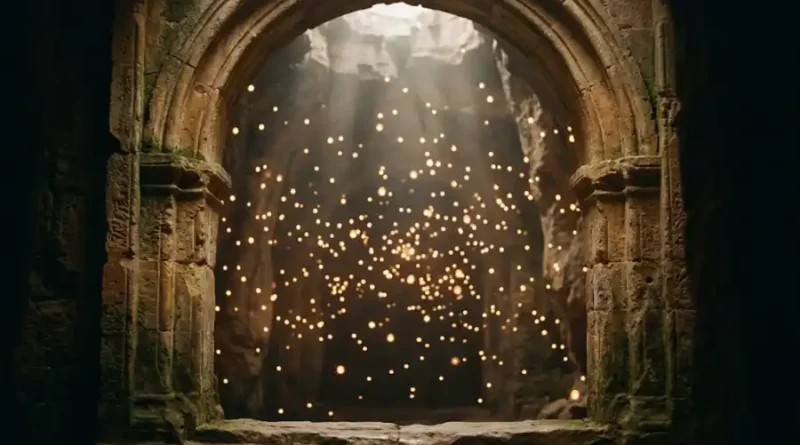
Ğuf is the Hebrew word for a heavenly space where
If you searched “What is Ğuf,” you probably ran into the word somewhere and had no idea what it meant. That’s fair. It is not a word most people use every day. Guf, also written as Ğuf, comes from a Hebrew term that means “body,” but in Jewish tradition it points to something much bigger: a heavenly space where souls rest before they are born.
This article walks through what the word means, where the idea comes from, why it still shows up in books, shows, and conversations today, and how it connects to some of the oldest stories in Jewish belief.
What Does Ğuf Mean?
The word Ğuf is a stylized spelling of the Hebrew word גּוּף, pronounced “guf,” and sometimes written as “guph” or “gup.” In plain Hebrew, guf simply means “body.” On its own, there is nothing mystical about the word at all.
But over the centuries, Jewish teachers gave the word a second life. They used it as a short name for a much longer phrase: the Otzar HaNeshamot, or “Treasury of Souls.” In Jewish mysticism, this treasury is described as a real place, tucked into the seventh level of heaven, holding every soul that has not yet been born into a human body.
So when someone asks what Ğuf means, there are really two answers worth knowing. The plain answer is “body.” The folklore answer is “the storehouse where souls wait for their turn on earth.”
The Old Story Behind the Word
The story goes back to early rabbinic writing, long before anyone had a word for genetics or biology. Ancient teachers wanted to explain something simple: where does a new person come from?
Their answer wove together the Garden of Eden, a special tree, and a line of angels. In one version of the story, a tree in the Garden of Eden, sometimes called the Tree of Life or the Tree of Souls, blossoms and grows new souls the way an apple tree grows apples. When a soul is ready, it falls from the tree and lands in the treasury, where it waits until it is called into the world.
Gabriel, Lailah, and How a Soul Reaches the World
Two angels show up again and again in this story.
The first is Gabriel. According to the old teaching, when a child is about to be conceived, Gabriel reaches into the Ğuf and pulls out the very first soul his hand touches. There is no picking a favorite soul over another. It is simply whichever one is closest.
The second is Lailah, known as the Angel of Conception. Once Gabriel hands off a soul, Lailah is said to watch over it the whole time it grows, right up until the moment of birth. In some versions of the tale, Lailah then gently touches the baby above the lip, and that small groove we all carry there is the mark left behind, along with the reason we forget what came before.
It is a small, human detail inside a much larger and cosmic story, and it is part of why this legend has stuck around for so long.
Why the Ğuf Matters in Jewish Mysticism
In Kabbalah, the branch of Jewish thought that deals with hidden meaning and mystical ideas, this treasury ties into a bigger picture involving Adam Kadmon.
Adam Kadmon is described as a kind of first, universal human, a pattern that holds the blueprint for every soul that will ever exist. Some teachers explain the Ğuf as connected to this figure’s body, which is one reason the word “body” fits so well even in its spiritual sense. Every soul waiting there is, in a way, a small piece of that first great pattern.
This idea also carries a strong message about worth. Every soul that leaves the treasury is one of a kind. No two are the same, and no soul can do what another one is meant to do. A newborn baby, seen through this lens, carries meaning that reaches well past being a new family member. It is a piece of something ancient finally stepping into the world.
Ğuf and the Coming of the Messiah
Here is where the story picks up real weight in Jewish tradition. According to the Talmud, the son of David, meaning the Messiah, will not come until the Ğuf is empty. In other words, every soul that was ever meant to be born has to be born first.
This turns something abstract, like the timing of a long-held religious hope, into something almost countable. Each new birth is treated as one soul closer to the treasury running out, and that emptying out is treated as one step closer to a moment many Jewish people have waited for across generations.
You do not have to hold this belief yourself to see why it has stayed part of Jewish teaching for so long. It gives weight and meaning to something as ordinary as a birth announcement.
Different Ways You Might See the Word Spelled
If you have searched around, you have likely noticed the spelling changes depending on where you look. You might come across:
- Guf
- Guph
- Gup
- Ğuf
The version with the small curved mark over the G, Ğuf, is not part of the original Hebrew. That mark, called a breve, belongs to the Turkish alphabet, where it changes how a letter sounds. When it shows up attached to this word online, it is usually a stylized spelling or a way search habits have reshaped the term, rather than a separate word with its own meaning. The idea behind both spellings stays the same either way.
Other Things “GUF” Can Mean
One more reason people land on this topic confused: GUF, written in capital letters, is also used as a short code or name for several completely unrelated things. A few examples include the country code for French Guiana, a federation representing labor unions worldwide, and the stage name of a well-known Russian rapper. None of these connect to the Hebrew word at all, so if your search brought back mixed results, that mix-up is likely why.
Ğuf in Books, Shows, and Everyday Conversation
The idea of a treasury of souls has moved past religious texts and into modern storytelling. Writers and show creators have borrowed the concept, sometimes using the word “Guf” directly and sometimes reshaping it, to describe a place where beings or souls rest before taking form. Fans who first hear the term this way often go looking for the original meaning, which is likely how you landed here too.
Stories and symbols tend to carry hidden meaning long after their original context fades. It is a good example of how an old piece of folklore can quietly shape modern culture, even when most people watching or reading have no idea where the idea began.
Frequently Asked Questions
Is Ğuf a real place? Not in the way a mountain or a city is real. It comes from Jewish oral tradition and mystical teaching rather than from a physical location anyone has visited. It is treated as a spiritual idea, not a geographic fact.
Does the Bible mention it by name? No. The word and the story around it developed later, through rabbinic teaching and Kabbalah, rather than appearing directly in the Torah.
Is Guf the same thing as a soul? Not quite. The Ğuf is the place. The souls are what wait inside it.
Why does the spelling change so often? Hebrew uses a different alphabet, so any English spelling is really just an attempt to match the sound. That is why you will run into guf, guph, gup, and even Ğuf.
A Small Word With a Large Story
Ğuf started as a simple Hebrew word for “body.” Somewhere along the way, it grew into a story about souls, angels, and the exact moment new life begins. Whether you came across it through religious study, a favorite show, or a random search that pulled you down a rabbit hole, the word carries centuries of thought behind it.
Next time you run into the word Ğuf, you will know there is real history behind those unusual-looking letters. It is a small doorway into one of the oldest and most human questions there is: where do we come from before we are here?
Visit the rest of the site In Tech Times for more interesting and useful articles. Thank you!
